How Paid Social Teams Rank Weekly Tests: Paid Social Creative Test Prioritization


TL;DR
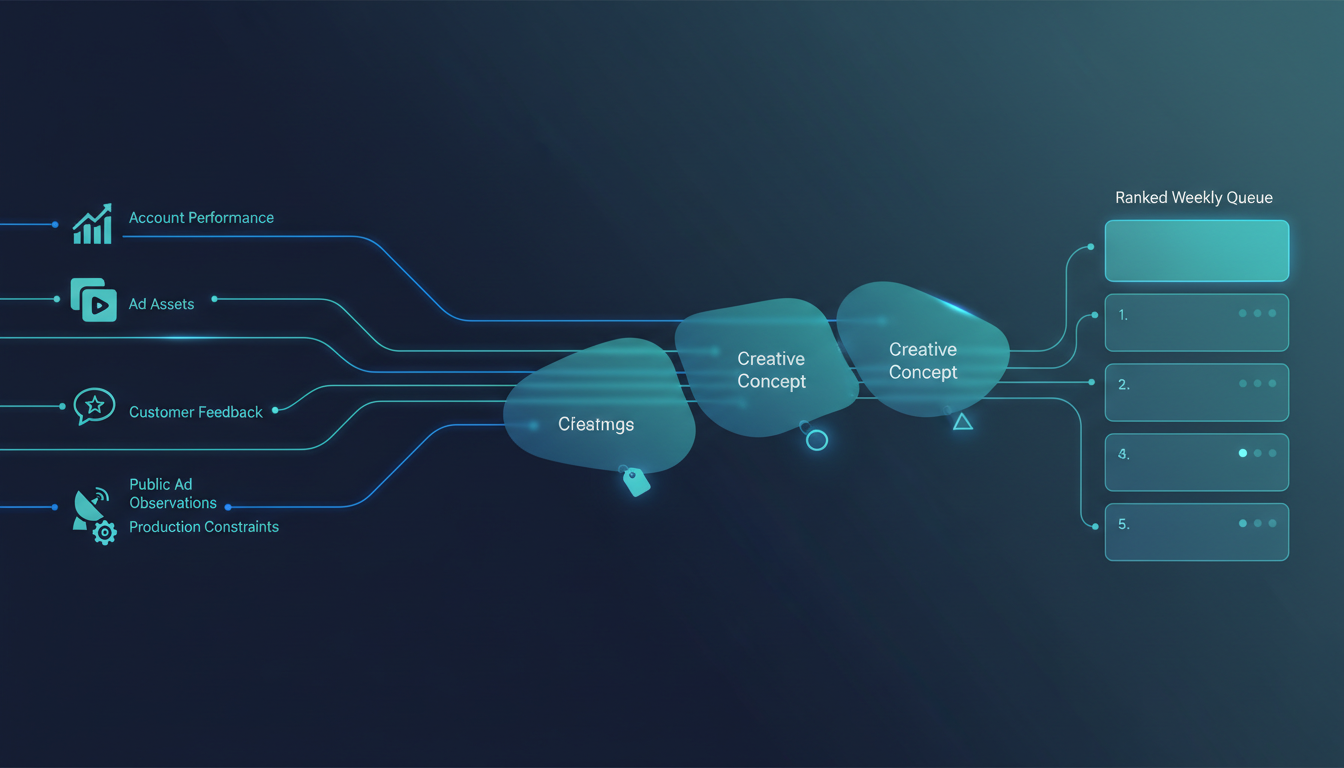
We use paid social creative test prioritization to turn performance signals, fatigue risk, customer language, competitive activity, effort, and learning value into one ranked weekly queue. This guide shows how to score ideas, balance the portfolio, write test cards, run the weekly meeting, and preserve learnings that make each next test more useful.
How Paid Social Teams Rank Weekly Tests: Paid Social Creative Test Prioritization
Paid social teams need a system because platform guidance recommends running no more than three concurrent tests without an advanced measurement setup. When every plausible idea enters the launch queue, limited budget turns into weak evidence and avoidable debate.
Paid social teams should rank weekly creative tests by hypothesis value, not by the loudest opinion or the number of available variants. A practical score combines expected business impact, supporting evidence, fatigue urgency, differentiation from active creative, production effort, and learning value. The ranked queue then receives explicit budgets, success metrics, review points, and stop or scale decisions.
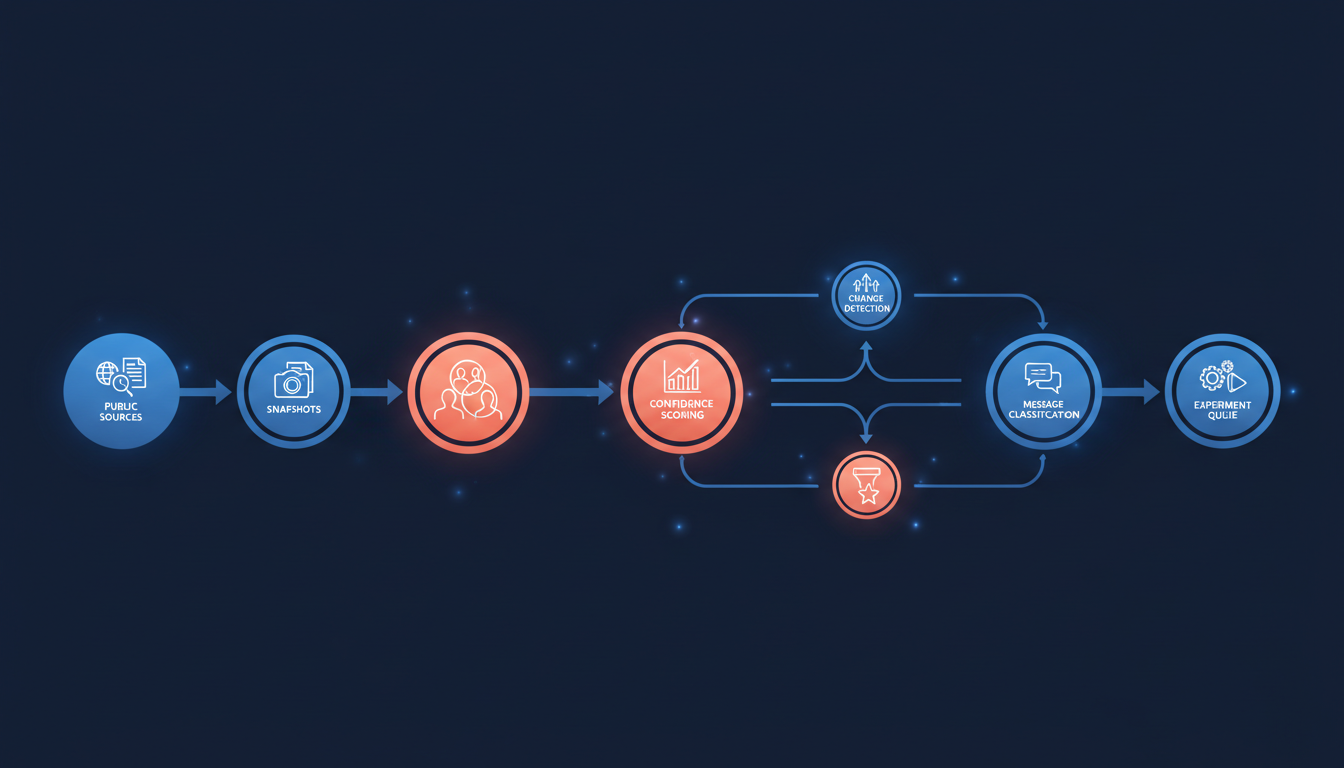
Below, we show how we turn those inputs into a weekly operating system, from defining testable ideas through recording the learning that changes next week’s plan. Our angle performance tracking approach keeps the parent creative idea visible before individual executions compete for budget.
What Should Teams Rank in Paid Social Creative Test Prioritization?
The unit to rank is not an ad file. It is a hypothesis that can change a decision. That distinction keeps a weekly plan from becoming a production request list with a few performance columns attached.
An angle is the strategic promise or customer belief, such as “this removes a frustrating task.” A hypothesis predicts how that angle will affect a defined audience and KPI. A concept is the creative route used to express it. An execution is the finished ad. A minor variant changes a small detail, such as a crop, caption treatment, or CTA, without testing a substantially different belief.
Start high in the hierarchy. If an angle has not earned support, testing three button colors or six nearly identical hooks will not answer the question the team actually needs answered.
A useful test brief states one change and what stays constant: audience, offer, objective, placement strategy, control, primary KPI, and the decision the team will make afterward. This matters because a test that changes the image, copy, offer, and format simultaneously may find a better ad, but it cannot reliably explain why it was better.
Which Evidence Should Decide What Ads to Test First?
Evidence should make the queue more defensible, not merely more complicated. We use four inputs that answer different questions: what has worked in the account, whether an active message is tiring, what customers say they need, and what the surrounding market repeatedly emphasizes.
First-party performance is the starting point. Compare results by angle, hook, proof type, format, audience temperature, spend, and time in market. Look for repeated patterns across multiple executions, not one unusually strong day. Then separate creative fatigue from a general audience or auction issue with our fatigue diagnosis framework.
TikTok’s published guidance identifies fatigue through day-to-day movement in CPA, reach rate, and performance. It says its fatigue index reaches a concerning point at 0.6, which is a useful reminder to consider several signals together rather than react to frequency alone.
Customer language adds evidence that ad dashboards cannot supply. Mine recurring objections, questions, desired outcomes, reviews, comments, DMs, support tickets, and sales-call phrasing. Competitive activity is context, not a performance score. Repeated active claims can show that a category is crowded, while a persistent unaddressed objection can point to differentiation.
Meta’s Ad Library lets anyone search currently active ads, but active status alone never proves an ad is profitable. Use it to frame opportunity, then validate with your own evidence and competitor research workflow. Turn the strongest customer-language themes into hypotheses with our comment analysis guide.

How Do You Score Weekly Creative Test Ideas?
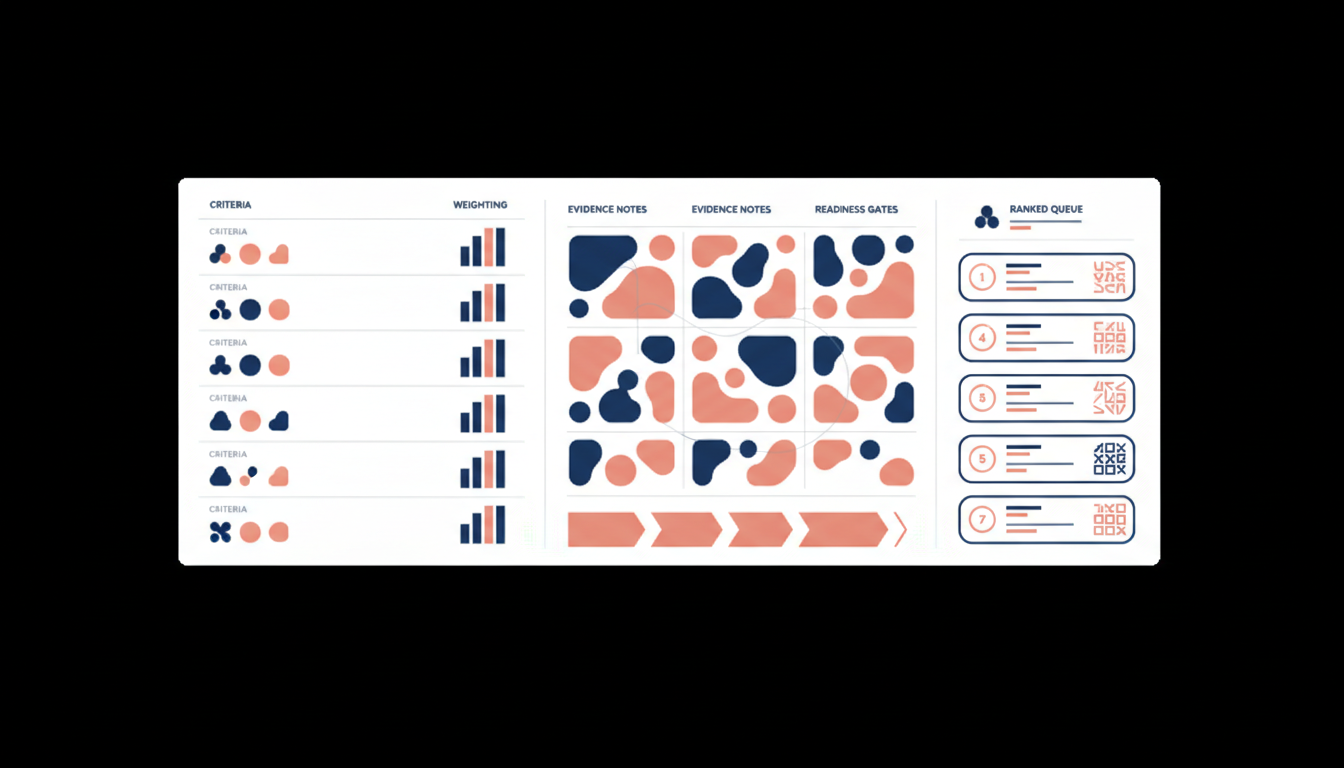
A scoring matrix does not replace judgment. It makes judgment inspectable. Every score needs a short note and a source, so someone can challenge the evidence or weighting instead of simply arguing for a favorite creative direction.
Use the same 1 to 5 scale for every candidate. The weights below are a practical starting point for a performance team. Adjust them only when the business has a clear reason, then keep them stable long enough to compare weekly decisions.
| Factor | Question To Ask | Score Guidance | Weight |
|---|---|---|---|
| Expected Impact | If correct, how much could this affect the primary business outcome? | Low to high potential | 25% |
| Evidence Strength | How direct, recent, and repeated is the support? | Weak to strong evidence | 20% |
| Urgency | Does fatigue or an active risk make action time-sensitive? | Low to urgent | 15% |
| Differentiation | Does this test a meaningfully distinct claim or route? | Cosmetic to distinct | 15% |
| Production Effort | How much work, approval, and dependency risk is involved? | High effort to low effort | 10% |
| Learning Value | Will either result change a future decision? | Narrow to reusable learning | 15% |
Multiply each factor score by its weight, add the results, and rank the parent hypotheses. A high-effort idea can still win, but it must have enough expected impact or reusable learning to justify its place.
Do not let correlated ideas occupy multiple slots. If three proposed ads all test the same promise with different footage, they belong under one parent hypothesis. Choose the best-ready execution, keep its siblings in reserve, and reserve other queue slots for genuinely different questions. This protects learning velocity and prevents cosmetic variants from crowding out a needed exploration test.
Experiment quality still matters after prioritization. Microsoft researchers warn that data-quality issues can cause teams to make the wrong decisions, which is why a score should never substitute for clean setup, tracking, or cautious interpretation of results from a controlled experiment.
How Should the Weekly Portfolio and Test Card Work?
A ranked backlog can still become lopsided. If every slot goes to a proven message, the account loses future options. If every slot is a brand-new idea, the team abandons useful patterns before learning how far they can travel. We balance the queue across three buckets.
| Bucket | Purpose | Eligible Work | Guardrail |
|---|---|---|---|
| Exploration | Discover new customer beliefs and creative routes | Distinct concepts with evidence | Protect capacity for new learning |
| Iteration | Improve a validated concept | One deliberate change to a known pattern | Avoid duplicate siblings |
| Proven Pattern | Sustain efficient delivery while tests run | Controlled extensions of established winners | Do not call maintenance a discovery test |
The right allocation depends on spend, production capacity, account stability, and fatigue risk. When proven creative is tiring, urgency may move a differentiated replacement up the queue. When performance is stable, the team can allow more room for exploration without treating every new concept as an emergency.
Every chosen item becomes a test card before launch. The card should include the parent hypothesis, target audience, control, exact variable, primary KPI, diagnostic metrics, budget or exposure cap, review point, owner, and pre-agreed scale, iterate, stop, or inconclusive conditions. Our ad hook decision framework explains how to make stop rules without confusing early directional data with a final outcome.
For conversion-focused split tests, TikTok recommends a minimum of seven days to pass learning, and says some tests need two to three weeks before useful insights emerge. Set the review point around the measurement design, not the team’s impatience, using its testing timeline guidance.
What Happens in the Weekly Creative Testing Meeting?
The weekly meeting is where evidence becomes a committed plan. It should be short enough to run consistently and strict enough that a debate ends with an owner, a launch condition, and a recorded decision.

Use this seven-step checklist:
- Review closed and in-flight test cards against their planned decision rules.
- Inspect performance, fatigue, and delivery signals by parent hypothesis.
- Add new customer-language and market-activity evidence to the backlog.
- Merge related executions beneath one parent hypothesis.
- Score, challenge, and rank the backlog using the six-factor matrix.
- Balance the exploration, iteration, and proven-pattern portfolio.
- Assign owners, budgets, readiness checks, launch dates, and review points.
The creative lead should confirm that the production approach preserves the intended variable. The analyst should flag weak data before the team turns it into a false lesson. Our evidence-ranked weekly plans connect these roles to one shared queue instead of separate dashboards and briefs.
How Do Results Improve the Next Weekly Plan?
A result only compounds when it changes what the team believes. Record whether the outcome supports, weakens, or leaves the hypothesis unresolved, plus the context: audience, offer, placement, spend, exposure, creative attributes, measurement caveats, and next action.
Avoid writing “winner” as the whole learning. A stronger record says which customer belief, proof type, hook structure, or execution condition appeared to help, where it applied, and what should be tested next. If several feature-led executions underperform across formats, that is stronger evidence about the angle than a single low-performing ad.
Contradictory results lower confidence or create a narrower follow-up question. A fatigue signal can increase urgency. Previously tested siblings lose priority, while a newly observed objection can become an exploration candidate. Our creative testing memory is built around this handoff, so a useful lesson does not disappear when the campaign ends or the team changes.
Build a Better Weekly Queue with Deepsolv
At Deepsolv, we help paid social teams move from scattered dashboards and opinion-led creative meetings to a decision system their whole team can inspect. We connect performance signals with the language customers use in comments and messages, then organize the evidence around angles, concepts, and testable hypotheses.
That gives strategists a clearer case for what to make, gives media buyers a defined measurement plan, and gives leaders a queue they can audit before budget moves.
We do not treat a list of active ads or a library of creative files as a recommendation. Our approach is built to surface the evidence behind a next test, show where ideas overlap, preserve the learning, and make the following week’s plan smarter.
Book a Deepsolv demo.
FAQs on Paid Social Creative Test Prioritization
How Do Paid Social Teams Prioritize Creative Tests?
Teams rank parent hypotheses by impact, evidence, urgency, differentiation, effort, and learning value. The highest candidates receive budgets, owners, review points, and clear decision rules.
How Many Creative Tests Should Run at Once?
Teams should run only as many tests as their budget and measurement design can support, while preserving distinct variables and enough delivery to interpret each outcome.
What Makes an Ad Test Worth Stopping?
Stop a test when a pre-agreed guardrail is breached after the observation period, tracking is unreliable, or results cannot answer the original hypothesis clearly enough.
Can Tools Recommend What Creative to Test Next?
Tools can recommend a next creative test when they combine performance, fatigue, customer language, market context, deduplication, and retained learning, not merely dashboard activity data.
How Do You Prevent Cosmetic Variants from Filling the Queue?
Group related executions beneath one parent hypothesis, require every candidate to identify its changed variable, and reject edits that cannot shape a meaningful future decision.