Creative AI Test Memory Alternatives That Learn from Failed Tests


TL;DR
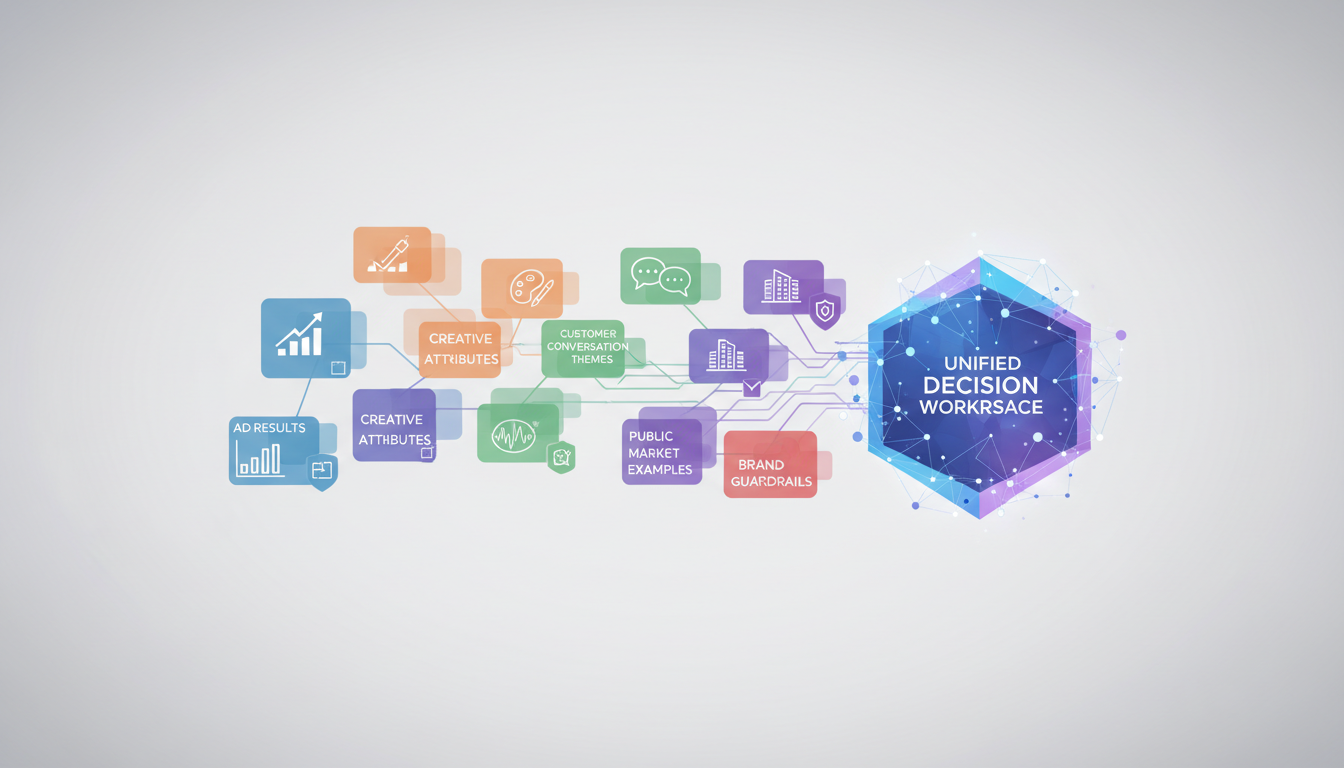
We built Deepsolv for teams that need better creative decisions, not just more variants. A creative AI test memory system should retain failed-test evidence, separate ideas from executions, detect fatigue in context, and rank a weekly plan using first-party performance plus observable market signals.
Creative AI Test Memory Alternatives That Learn from Failed Tests
We treat creative selection as seriously as creative production because NCS research estimates that creative contributes 49% of advertising’s total sales impact. More output can help, but it does not prevent a team from paying to learn the same lesson twice.
A creative AI test memory system is right when your team needs to decide what to test, refresh, or stop, not merely produce more ads. It should retain prior hypotheses and results, separate concepts from executions, detect fatigue with context, and rank next experiments using first-party evidence and market signals.
We compare generation-first workflows with memory-and-prioritization workflows, explain what responsible stop recommendations require, and show how an in-house team can evaluate a ranked weekly plan.
When Do You Need Generation Capacity Versus Test Memory?
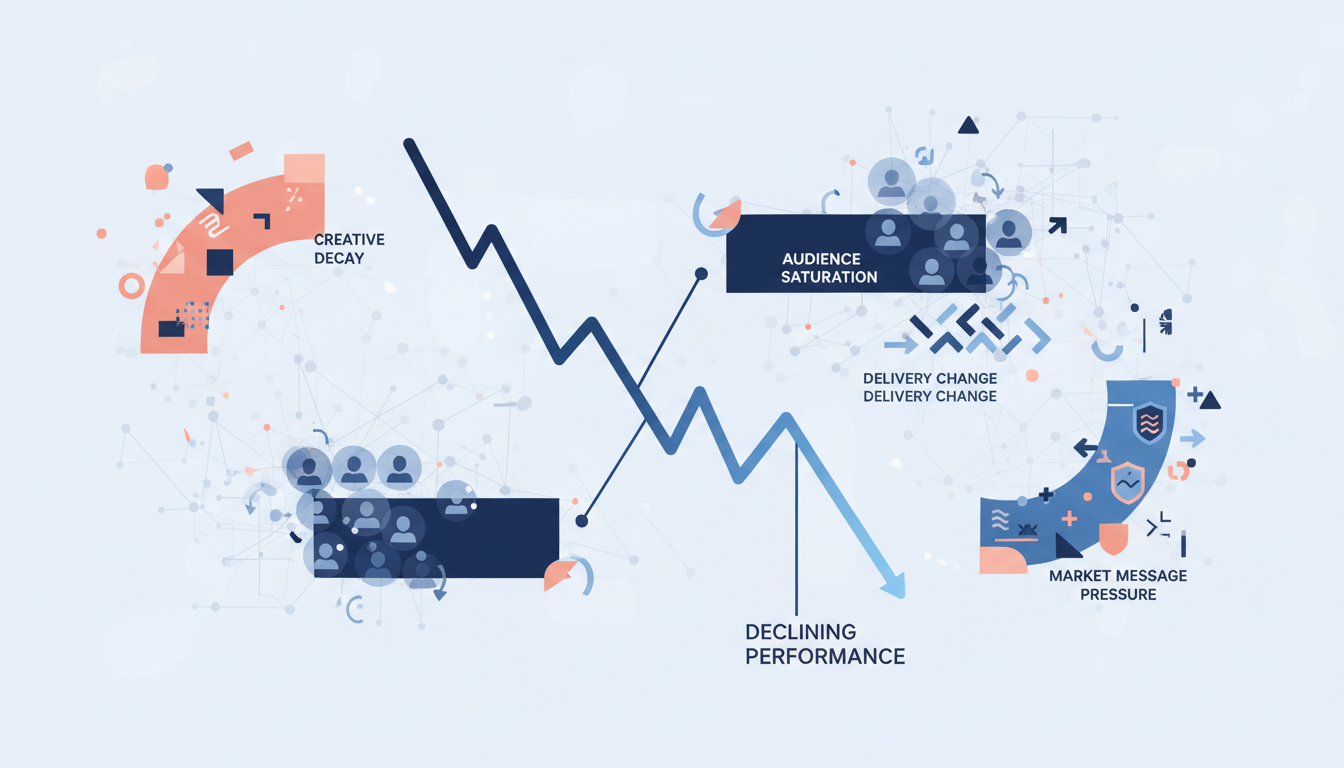
Generation capacity and test memory solve different constraints. If your team has too few usable assets, needs new formats, or cannot keep pace with production requests, generation is the bottleneck. If the team has plenty of variants but keeps retesting tired hooks, familiar formats, or disproven offers, the bottleneck is decision quality.
That distinction matters because most marketers recognize the importance of creative but do not have a reliable way to measure it. A measurement gap study of 1,091 marketers found that 80% see creative quality as a key effectiveness driver, while only 46.2% have analysis in place to measure its impact.
| Capability | Generation-First Workflow | Memory-And-Prioritization Workflow |
|---|---|---|
| Generation | Produces new assets and variants | Turns ranked briefs into focused production |
| Test Memory | May retain assets and results | Stores hypotheses, executions, outcomes, and notes |
| Failure Suppression | Usually depends on manual review | Deprioritizes repeat patterns with stated rationale |
| Fatigue Detection | May show performance trends | Evaluates deterioration in delivery context |
| Competitor Context | May surface visible ads | Uses market patterns as directional evidence |
| First-Party Data | Connects performance data where supported | Connects results to decisions and future tests |
| Ranking Logic | Scores generated assets | Ranks hypotheses by evidence and expected value |
| Brand Controls | Applies guidelines to output | Retains context across products, audiences, and formats |
| Exports | Sends assets to media workflows | Exports briefs, decisions, evidence, and learnings |
| Pricing | Often tied to seats or generation limits | Should disclose access, data, and implementation terms |
A team that needs more production should choose for generation capacity. A team that needs to stop wasting media and production time should choose for memory. Our ad copy tools comparison explains why performance-connected inputs matter when copy and creative are part of the same testing system.
What Must a Creative AI Test Memory Retain?
A gallery of past ads is not enough. We believe memory becomes useful only when it preserves the reasoning around a test, including what changed, what did not, and whether the result was strong enough to support a decision.
Store the Hypothesis, Not Just the Asset
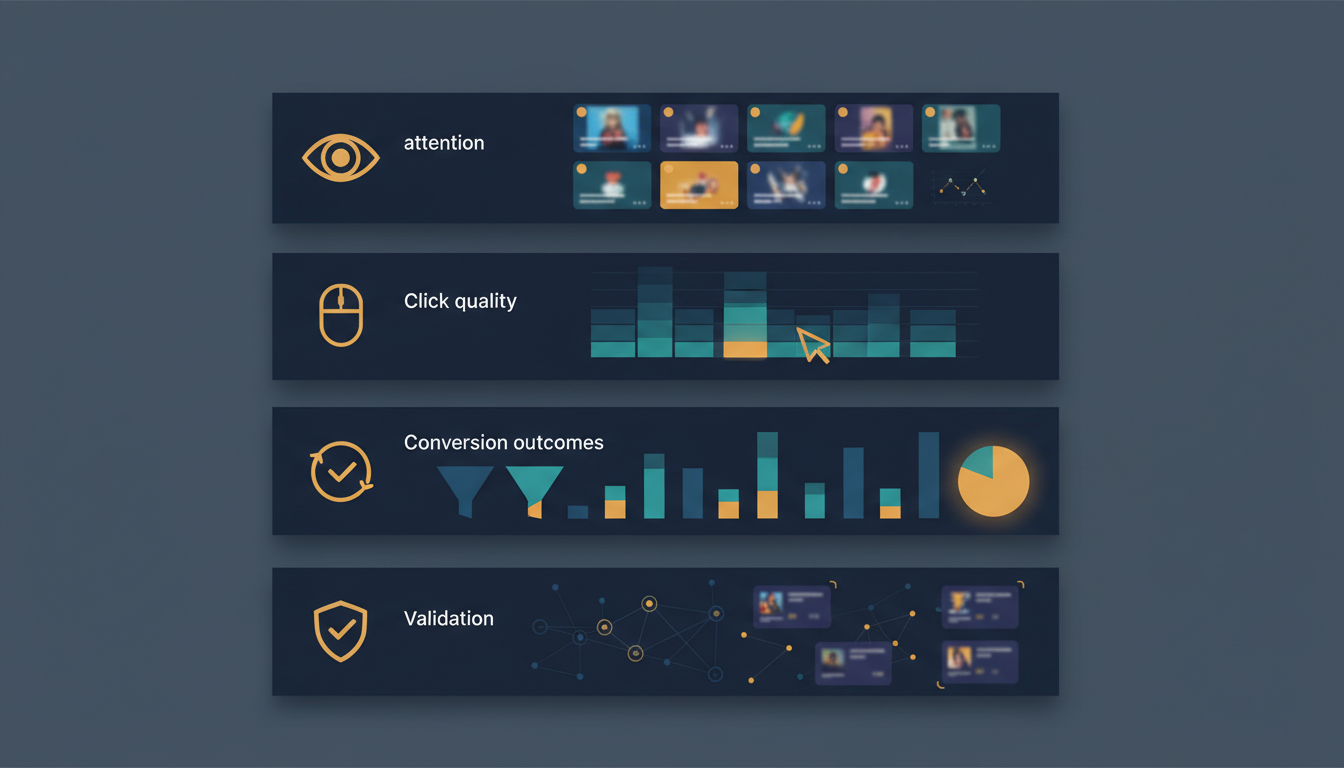
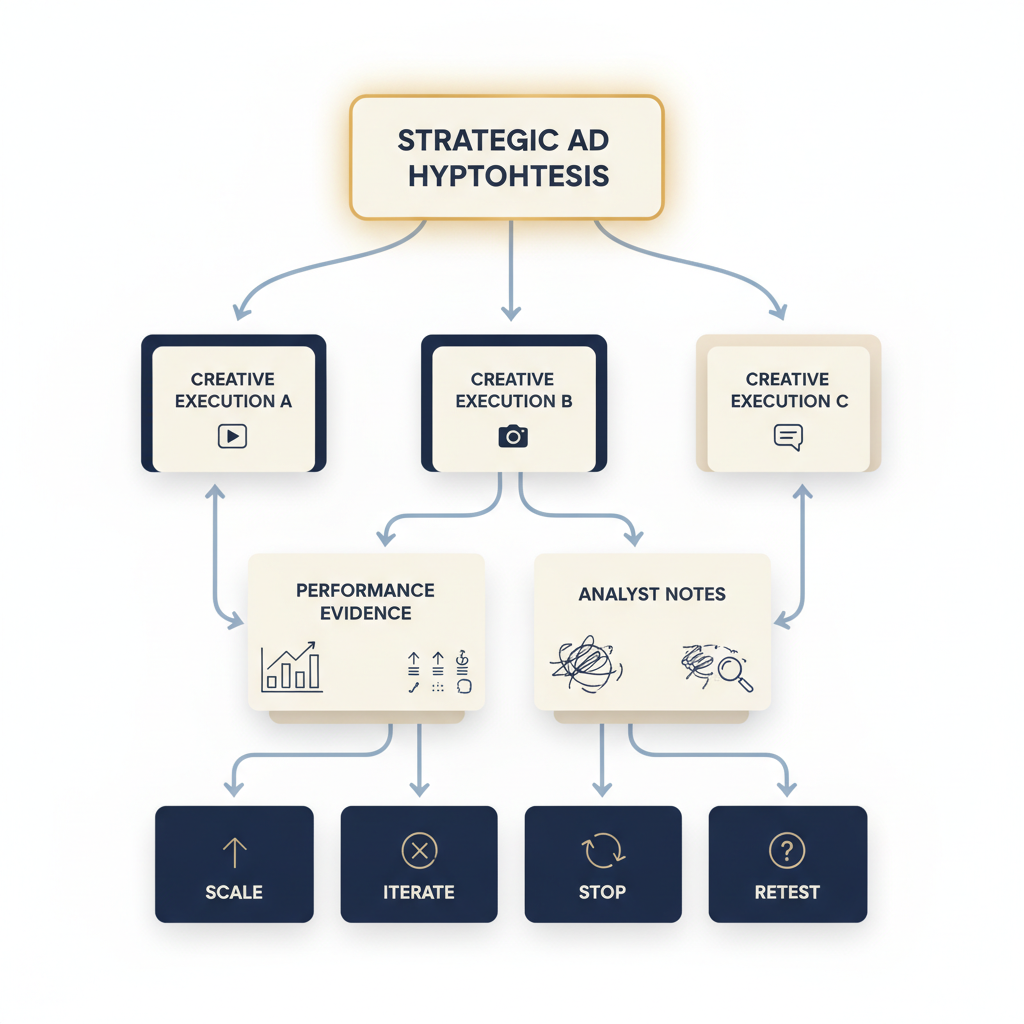
Every record should connect an ad to its product, audience, offer, angle, hook, proof type, format, CTA, optimization event, and launch context. It should also capture spend, impressions, conversions, the chosen business metric, and the decision made after the test.
That structure lets a creative lead ask a useful question: did the benefit-led angle fail, or did one creator, one hook, or one placement fail? Our creative testing memory approach is built around carrying that distinction forward.
Separate Ideas from Executions
An angle is the underlying proposition, such as solving a customer objection or showing a product outcome. An execution is the particular way it appears, such as a creator script, opening hook, visual treatment, length, format, or CTA.
A weak execution should not automatically eliminate a promising idea. Likewise, a winning ad should not cause a team to clone the same format until it loses relevance. Good memory lets us identify what is worth iterating and what has earned a stop recommendation.
Teams also need to examine patterns across multiple executions before they record a conclusion. A single short-form video can underperform because of its opening, creator fit, production quality, or delivery conditions. With consistent labeling, we can compare comparable creative decisions and learn whether the issue belongs to the idea itself or only one expression of it. For a practical way to organize this analysis, see our angle performance tracking guide.
Preserve Analyst Notes and Exceptions
Performance data needs context. A conversion result can be distorted by a stock-out, broken landing page, creative-policy issue, audience mismatch, delivery shift, or a test that never accumulated meaningful evidence.
Notes should be first-class data, not an afterthought in a chat thread. This protects teams from building a false history where every low result becomes a permanent failure label.
When Should a System Recommend Stopping a Test?
A responsible stop recommendation is not a red performance number. It is a conclusion supported by enough evidence, under conditions that make the comparison meaningful. We separate “stop,” “iterate,” and “inconclusive” because collapsing all three into “failed” creates bad creative strategy.

Require Spend Sufficiency and Conversion Evidence
There is no universal spend threshold that works for every account. The right evidence bar depends on conversion lag, average order value, optimization event, baseline performance, test design, and the team’s risk tolerance.
We recommend defining the evidence requirement before launch, then showing the spend, impressions, conversions, comparison window, and decision rule behind each recommendation. That makes the decision reviewable instead of automatic.
Treat Fatigue as a Trend, Not a Bad Day
Fatigue is deterioration over time under comparable conditions. It is not a synonym for any decline in CTR, CPA, or ROAS. Audience saturation, seasonality, offer changes, and auction conditions can all produce similar symptoms.
Meta notes that campaign delivery begins with a learning phase as the system explores audiences and placements, which is why delivery context matters before labeling creative as exhausted. Our creative fatigue guide helps teams separate creative fatigue from audience saturation.
Keep Inconclusive Results Visible
A system should recommend stopping when comparable tests have enough unfavorable evidence. It should recommend iterating when the hypothesis has promise but the execution is weak. It should mark a result inconclusive when delivery, spend, or conversion evidence cannot support a clear conclusion.
That third state prevents the worst form of false confidence: assuming the account learned something when it did not.
How Does Creative AI Test Memory Build a Weekly Plan?
A weekly plan should not be a pile of ideas ordered by novelty. We rank recommendations by expected impact, evidence strength, novelty, production effort, and learning value. The result should make clear what to test next, what to refresh, and what should not consume another week of work.

Visible market activity can inform a hypothesis, but it cannot reveal private performance. Meta’s Ad Library rules state that commercial searches show currently active ads, while extra spend and reach data applies to issue, electoral, or political ads. We use competitor context to understand patterns, not to claim access to another advertiser’s ROAS, conversion rate, targeting, or test results.
| Rank | Recommendation Type | Decision Basis | Evidence To Show | Owner |
|---|---|---|---|---|
| 1 | New Hypothesis | Strong upside and fresh evidence | First-party performance plus market pattern | Creative Lead |
| 2 | Winner Refresh | Existing concept shows fatigue risk | Trend window, audience context, and prior winner history | Designer |
| 3 | Iteration | Angle has promise, execution needs work | Comparable execution results and analyst notes | Copywriter |
| 4 | Suppress | Repeat hypothesis lacks support | Prior test history and explicit stop reason | Growth Lead |
The weekly plan needs an explanation beside every priority. “Test this” is not enough. The team should see why it ranks now, which prior learning it extends, what it must not repeat, who owns production, and what result would trigger scale, iteration, or retirement. Our concept prioritization framework details the strategic inputs behind that ordering.
Market context also needs restraint. A long-running visible format can be a useful pattern to investigate, but it is not proof of profitability. Teams should turn visible activity into original test hypotheses without mistaking visibility for conversion evidence.
What Should an In-House Team Verify Before Choosing?
A trial should test the learning system, not just the generation screen. Ask a vendor to import representative history, show the relationship between past ads and results, and explain three different recommendations: one to test, one to refresh, and one to stop.
Use the evaluation to answer these practical questions:
- Data Model: Can we export assets, creative metadata, performance data, analyst notes, briefs, and decisions in usable formats?
- Suppression Logic: Can we see why a format, hook, or angle was deprioritized, then override the recommendation when context changes?
- Brand Context: Can the system retain product, audience, claim, hook, script, and format context across campaigns?
- Implementation: Can the vendor explain the required data connection, onboarding work, permissions, retention terms, and support model in writing?
- Commercial Terms: Are pricing, generation limits, user access, export rights, and offboarding terms clear before procurement?
Current public generation-first pricing can begin at $14 per month for 50 generations, rise to $55 per month for 250 generations, and move to custom enterprise terms. Price alone is not the decision. The more important question is whether the system preserves the reasoning that prevents another cycle of low-value tests.
For a broader buying process, our creative strategy platforms guide helps teams compare workflow fit and decide which capabilities belong in their evaluation.
See How Deepsolv Builds Better Creative Decisions
At Deepsolv, we built our creative intelligence platform for the point where more output stops solving the problem. We bring together your historical ad performance, customer feedback, and observable category creative activity so your team can see the evidence behind a recommendation. Our Brand Brain retains what worked, what failed, and why, while our weekly plan helps teams decide what to test, improve, skip, or retire. We do not ask you to treat visible competitor ads as private performance data. Instead, we use them as market context alongside the data that only your account can provide. That means creative leads can protect brand context across products, audiences, hooks, and formats, while growth teams retain a clear rationale for each decision. If your next week of testing needs fewer recycled ideas and more defensible priorities, you can talk to our team today.
FAQs on Creative AI Test Memory
Can Creative AI Test Memory Know That a Format Failed?
Yes. It should store the original hypothesis, comparable executions, spend, conversion evidence, and delivery context, then classify outcomes as stop, iterate, or inconclusive for reuse.
Is a Failed Format the Same as Creative Fatigue?
No. Fatigue is deterioration over time under comparable conditions. A failed format can instead reflect weak execution, audience mismatch, limited delivery, or insufficient test evidence.
Can Competitor Context Reveal Actual Performance?
Visible ads reveal messaging, formats, offers, and activity patterns. They do not reveal another advertiser’s private ROAS, conversion rate, targeting logic, or causal test results.
What Should Rank a Weekly Test Plan?
Rank recommendations by expected impact, evidence strength, novelty, effort, and learning value. Each needs a rationale, named owner, and defined condition for stopping or scaling.
How Can We Verify Data Portability?
Ask for exports of assets, metadata, results, analyst notes, briefs, and decisions. Verify that your team can read, reuse, and retain those files independently afterward.