

TL;DR
Build a Meta Comment and DM Feedback-to-Test Workflow that turns permitted customer feedback into privacy-aware creative tests and measurable outcomes.
Paid social teams already have a large enough signal pool to demand a better process: Meta reported $196.175 billion in advertising revenue in its annual report. That scale makes customer language too useful to leave in an inbox or comment thread.
A Meta comment and DM feedback-to-test workflow turns permitted business-account conversations into redacted evidence, tagged themes, ranked creative hypotheses, and measured campaign tests. It keeps every recommendation tied to source evidence and routes ambiguous, regulated, or reputationally sensitive themes to human review before they influence creative. We cover access, tagging, prioritization, testing, and governance.
How Does a Meta Comment and DM Feedback-to-Test Workflow Start with Permitted Access?
We start with a simple boundary: collect only the comments, replies, and messages that a connected business account is permitted to access. A useful workflow is not a scrape of everything people say online. It is a documented view of feedback connected to the Page or professional account the business administers.
For Messenger and Instagram business conversations, current Conversations API documentation specifies business-account permissions, task access, and advanced-access conditions. The documentation also notes that inactive conversations in the requests folder may not be returned after 30 days, so completeness should never be assumed.
| Source Type | What We Can Analyze | Permission Boundary | What We Exclude |
|---|---|---|---|
| Facebook Page Comments And Replies | Comments tied to authorized business Page content and ads | Connected Page, appropriate task access, approved permissions | Unconnected Pages, personal accounts, and unrelated private content |
| Messenger Business Conversations | Messages sent to a connected business Page | Page token, approved messaging permissions, applicable advanced access | Person-to-person chats and messages never sent to the business |
| Instagram Professional Comments | Comments on authorized professional-account media | Connected professional account and approved comment access | Comments on accounts the business does not administer |
| Instagram Business Conversations | Messages sent to a connected professional account | Linked Page, verified business, approved messaging access | Private inboxes outside the connected business account |
We attach the source type, account, content or ad ID, timestamp, and permission context before any analysis begins. That provenance is what lets a strategist challenge a recommendation instead of accepting an unexplained summary. For a closer look at the collection side, read our Meta comment guide.
How Do We Turn Raw Feedback into Trustworthy Themes?
Raw customer language is valuable because it is specific, but specificity alone does not make it reliable. We first remove unnecessary personal details, then classify the remaining language into structured fields that explain what the person wants, fears, asks, or is trying to accomplish.
A theme only becomes useful when it can be traced to more than a vague sentiment label. “Negative” does not explain whether someone doubts delivery speed, questions suitability, wants proof, or needs a clearer offer.
What Tags Make Feedback Actionable?
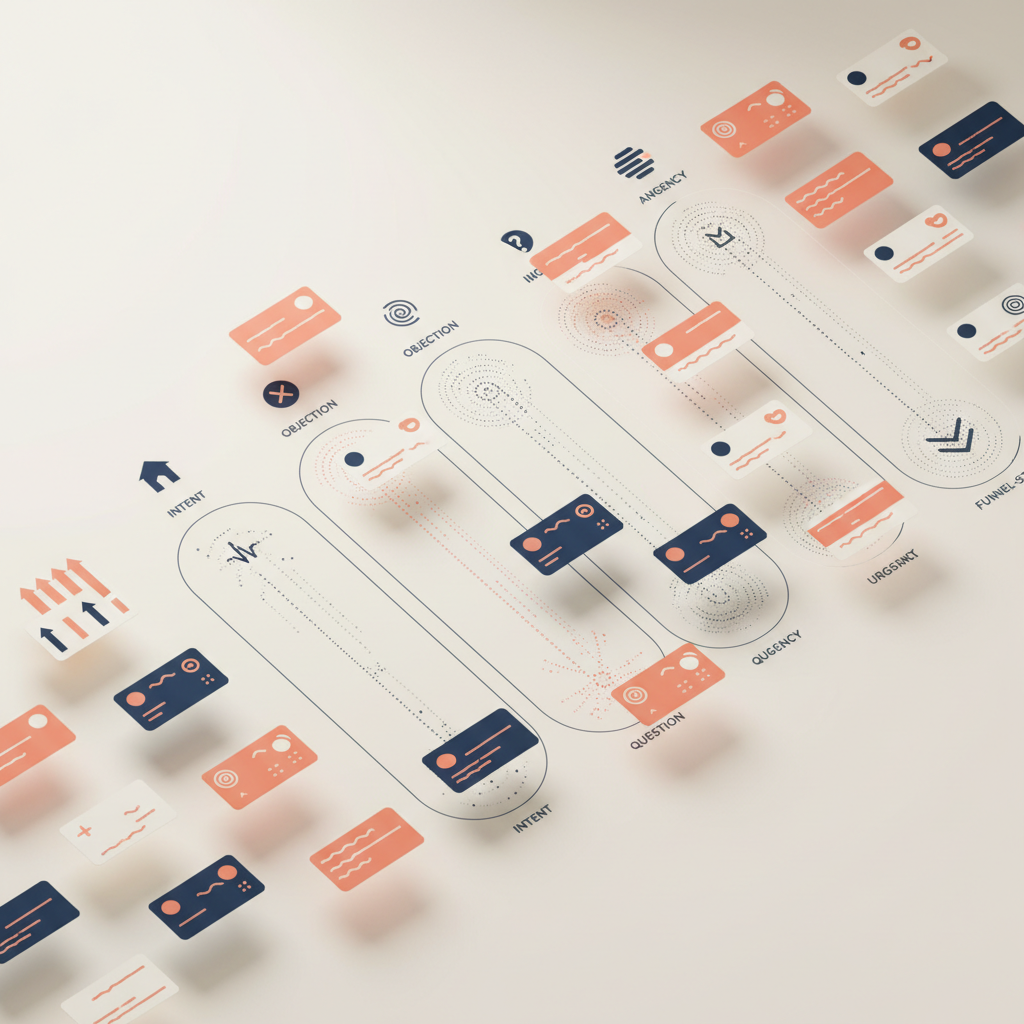
We use a shared vocabulary so researchers, media buyers, and creative teams interpret a theme the same way.
- Intent: Learn, compare, buy, troubleshoot, or seek reassurance.
- Sentiment: Positive, neutral, negative, mixed, or unclear.
- Objection: The friction stopping the next action, such as price, trust, timing, fit, or complexity.
- Question: The unanswered detail a customer needs before moving forward.
- Desired Outcome: The result the customer hopes to achieve.
- Urgency: Immediate, soon, researching, or unknown.
- Funnel Stage: Discovery, consideration, conversion, post-purchase, or retention.
We also preserve topic, source type, campaign or ad ID, recency, evidence count, and reviewer status. This helps us distinguish a broad creative opportunity from a narrow support issue.
How Do We Separate Signals from Noise?
We do not treat every comment as a vote. Spam, copied replies, isolated complaints, irrelevant jokes, and suspicious bursts can all distort a theme if they are counted without context. We look for repeated language across independent people, placements, and time periods, then compare that pattern with the ad and landing-page context.
A recurring question can deserve attention even when its sentiment is neutral. Conversely, a high-volume complaint may need operational resolution rather than a new ad angle. The point is not to force every signal into paid creative. The point is to make the next decision defensible.
When Does a Human Need to Review a Theme?
Human review is required when a theme is ambiguous, potentially regulated, tied to safety or health, vulnerable to misinterpretation, or likely to create reputational harm. We also review claims before they become proof points, especially when customer wording could overstate what an offer can deliver.
Our creative testing memory keeps those decisions connected to their evidence, including why a team approved, revised, or rejected an idea.
How Do We Rank Themes into Creative Tests?
A useful theme backlog is not a list of interesting quotes. It is a ranked set of opportunities with a clear reason for testing now, a defined risk level, and a proposed creative change. We score the opportunity, then make the score explainable.

What Should Determine Priority?
We rank themes using five dimensions: frequency, commercial relevance, recency, severity, and testability. Frequency asks whether the signal recurs. Commercial relevance asks whether it connects to purchase intent or a conversion barrier. Recency protects against acting on outdated language. Severity identifies risks, and testability asks whether the team can isolate a creative or page change.
Risk remains a gate, not a score that popularity can overcome. A theme involving an unsupported claim, a sensitive personal situation, or a legal concern goes to review even if it appears often.
How Does a Theme Become a Creative Hypothesis?
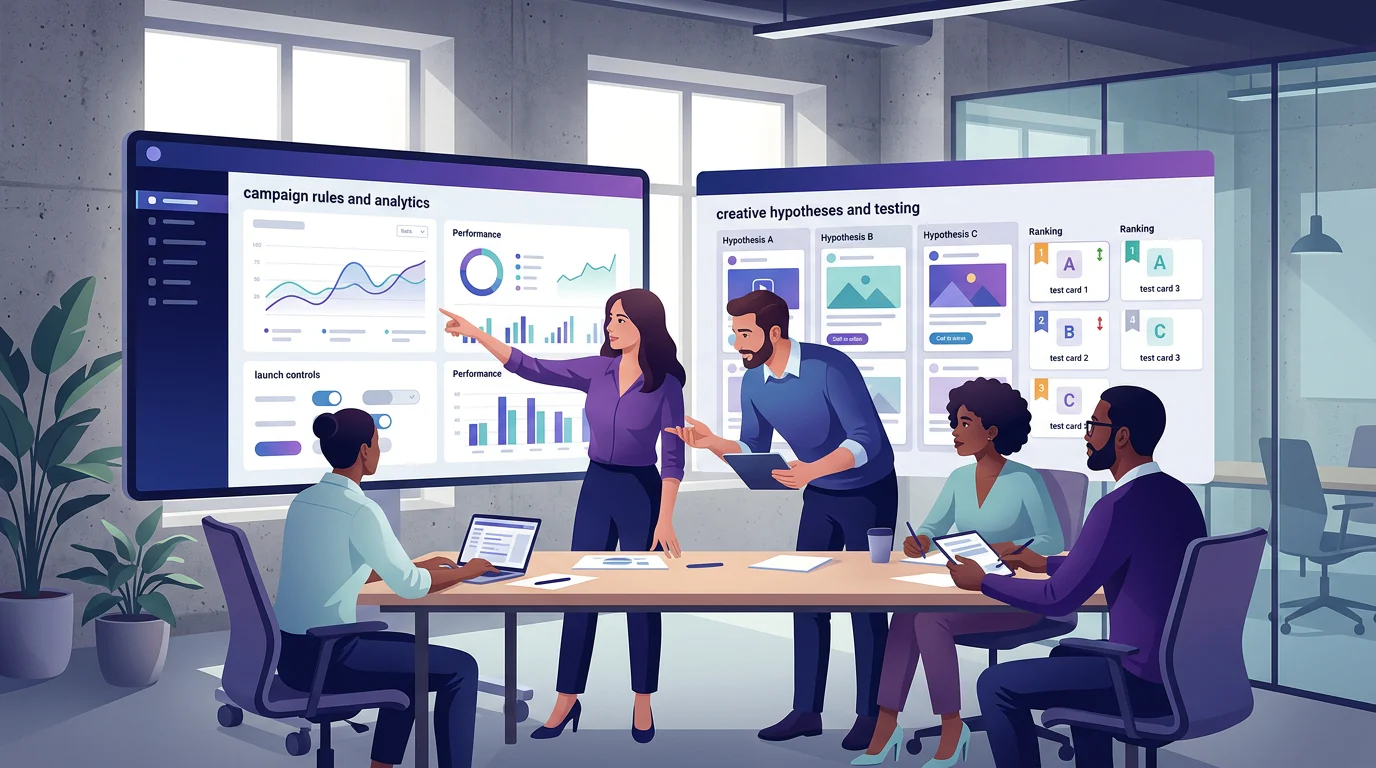
We convert the theme into one stated bet: if we change a hook, script, offer frame, proof point, FAQ response, or landing-page explanation, the chosen campaign outcome may improve. The test card should name one primary change and one primary metric, so the result remains interpretable.
| Theme | Anonymized Evidence | Intent | Funnel Stage | Proposed Creative Change | Risk Flag | Confidence | Outcome |
|---|---|---|---|---|---|---|---|
| Delivery Certainty | Redacted source record retained with reviewable IDs | Pre-Purchase Reassurance | Consideration | Lead with delivery expectations and approved proof | Verify Delivery Claim | Medium | Compare purchase conversion rate against control |
| Product Fit Question | Redacted source record retained with reviewable IDs | Suitability Check | Discovery | Add a use-case hook and qualifying FAQ response | Review Eligibility Language | Medium | Compare qualified click rate against control |
| Price Objection | Redacted source record retained with reviewable IDs | Value Comparison | Conversion | Test value framing and approved proof point | Verify Offer Terms | High | Compare cost per purchase against control |
What Are the Five Steps in the Workflow?
- Collect permitted feedback and attach provenance.
- Redact unnecessary personal data and apply consistent tags.
- Filter noise, cluster repeated themes, and assess confidence.
- Turn approved themes into ranked creative hypotheses.
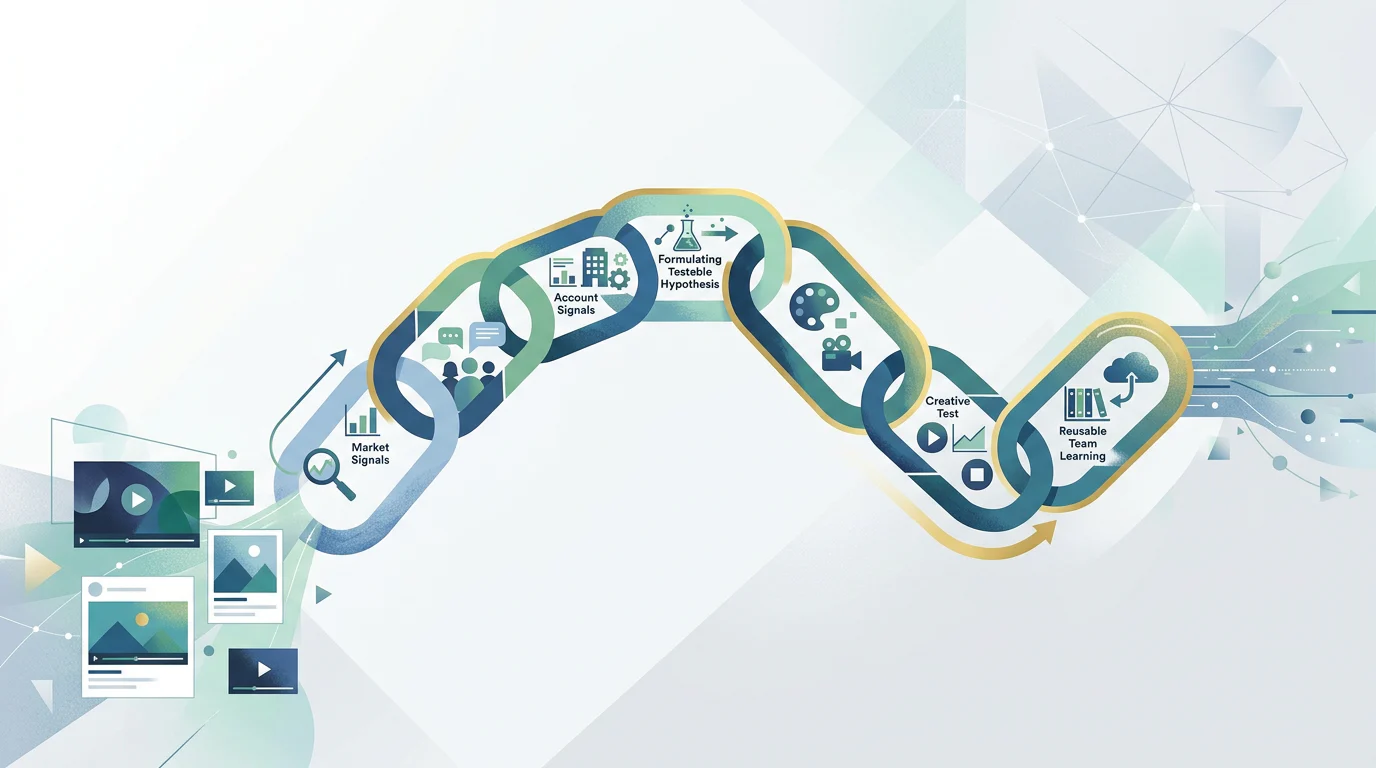
- Measure the test, log the result, and update guidance.
We use our concept prioritization framework to keep the backlog focused on decisions a paid-social team can actually execute.
How Do We Handle the Example Behind a Test Card?
We retain the real evidence in a controlled record, not in public-facing creative documentation. The visible test card can describe the theme and decision while the underlying source remains anonymized, permission-aware, and available to authorized reviewers.
That distinction matters. A public quote is not required to prove that a team followed a rigorous process, and it should not become an excuse to expose customer identities.
How Do We Measure and Reuse Each Result?
The final step is where comment analysis becomes a creative learning system. We preselect the campaign outcome that matters, keep the audience and other variables as controlled as practical, and document the exact creative change made because of the theme.
Meta Ads Manager supports campaign A/B test setup, but the platform result alone does not explain whether customer language drove the improvement. We preserve the theme ID, hypothesis, creative version, test conditions, chosen metric, result, and decision so the connection remains reviewable.
For each completed test, we record:
- Source Theme: The approved, anonymized theme and linked evidence record.
- Hypothesis: The customer-language insight translated into one specific creative change.
- Test Design: The controlled variable, primary outcome, and campaign context.
- Result: The measured outcome, including whether the hypothesis was supported.
- Guidance Update: The approved learning, limitation, or reason not to reuse the angle.
Our creative intelligence software helps teams preserve this chain across campaigns, rather than rediscovering the same objection in a different dashboard next quarter.
What Makes the Workflow Private and Accountable?
Privacy and accountability are not cleanup steps after analysis. They shape what we collect, who can review it, what we retain, and which ideas reach production. We minimize personal data before analysis and default to aggregated themes instead of individual-level conclusions.
The EU privacy principles emphasize purpose limitation, data minimization, storage limitation, confidentiality, and accountability. In practice, that means we define the purpose for feedback analysis, set a retention approach, restrict access by role, and document deletion or withdrawal handling.

Privacy And Methodology Note: We use permitted business-account feedback, remove unnecessary identifiers, maintain evidence only for authorized review, and report themes in aggregate. We do not use a feedback theme to make automated decisions about an individual or to infer sensitive traits.
We also keep human reviewers in the loop when a classification is unclear or a creative claim needs verification. That makes the workflow more useful for competitive ads research because the team can move quickly without losing the judgment required for sensitive decisions. For broader decision-making context, see our ad creative strategy guide.
Why Choose Deepsolv for This Workflow?
Competitive ads research gets more valuable when the people running tests can see why a recommendation exists, challenge it, and reuse what worked. At Deepsolv, we built our workflow around that discipline. We connect customer language to creative decisions without treating a dashboard summary as a verdict. Our platform keeps evidence, theme, hypothesis, test, and outcome in one reviewable chain, so a winning angle can become guidance and a failed angle does not return as a fresh idea next month. Teams can use it to review emerging objections, rank the best response, and preserve the reasoning behind every decision across accounts, formats, and reporting periods, without losing the original customer context. We also make room for human judgment when a topic is ambiguous, regulated, or reputationally sensitive. If your paid-social team needs a reusable creative learning system, you can request a demo and explore Deepsolv
FAQs on Meta Comment and DM Feedback-to-Test Workflow
Can We Analyze Both Comments and DMs?
Yes. We can analyze permitted comments and business conversations from connected accounts, but private personal chats, unauthorized accounts, and unavailable message requests must remain outside the workflow.
Why Is Sentiment Alone Not Enough?
Sentiment describes tone, not commercial meaning. Our workflow pairs it with intent, objections, questions, urgency, outcomes, and funnel stage before a team proposes creative changes.
How Do We Filter Spam and Coordinated Noise?
We separate duplicate or coordinated activity, spam, and isolated complaints from recurring independent signals, then require a reviewable evidence trail before testing any public claim.
What Does Success Look Like?
Success is not a prettier summary. It is a documented creative decision tied to a source theme, a defined metric, a result, and updated guidance.
Where Can I Find Related Creative Research?
Our insights share practical research on creative strategy, competitive analysis, and testing decisions, helping teams extend this workflow while retaining evidence-first discipline for confident decisions.